第29課Leçon 29Lesson 29Lección 29
だい29か
〜しまいました / 自動詞 Verbe intransitif (自)/ 自+ています
〜しまいました / 自動詞 Intransitive verbe (自)/ 自+ています
〜しまいました / 自動詞 Verbo intransitivo(自)/ 自+ています
近日 公開Bientôt disponibleComing soonPróximamenteこの ビデオは じゅんびちゅうです。もうすぐ 見られます!Cette vidéo est en préparation. Elle arrive bientôt !This video is being prepared. It’s coming soon!Este vídeo está en preparación. ¡Muy pronto!
日本語の字幕は動画の中にあります。下に訳が出ます(右上の言語ボタンで変えられます。「Rômaji」でローマ字も)。Les sous-titres japonais sont dans la vidéo ; la traduction s’affiche ci-dessous (choisissez la langue en haut à droite, « Rômaji » pour les rômaji).Japanese subtitles are in the video; the translation appears below (change the language at the top right; “Rômaji” shows rômaji).Los subtítulos japoneses están en el vídeo; la traducción aparece abajo (cambia el idioma arriba a la derecha; «Rômaji» muestra el rômaji).
Can-do ごとの ビデオLes vidéos, objectif par objectifVideos, one per can-doVídeos, uno por objetivo
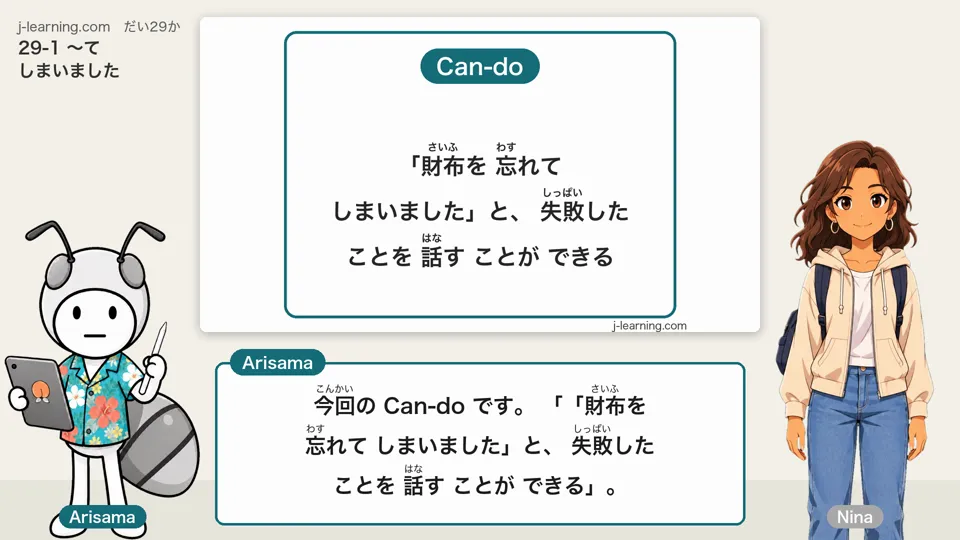 Can-do 29-1「財布を 忘れて しまいました」と、 失敗した ことを 話す ことが できる。Je peux raconter une erreur ou un incident : « J'ai oublié mon porte-monnaie. »I can talk about a mistake: “I've gone and forgotten my wallet.”Puedo contar un error: «Se me ha olvidado la cartera.»近日 公開Bientôt disponibleComing soonPróximamente
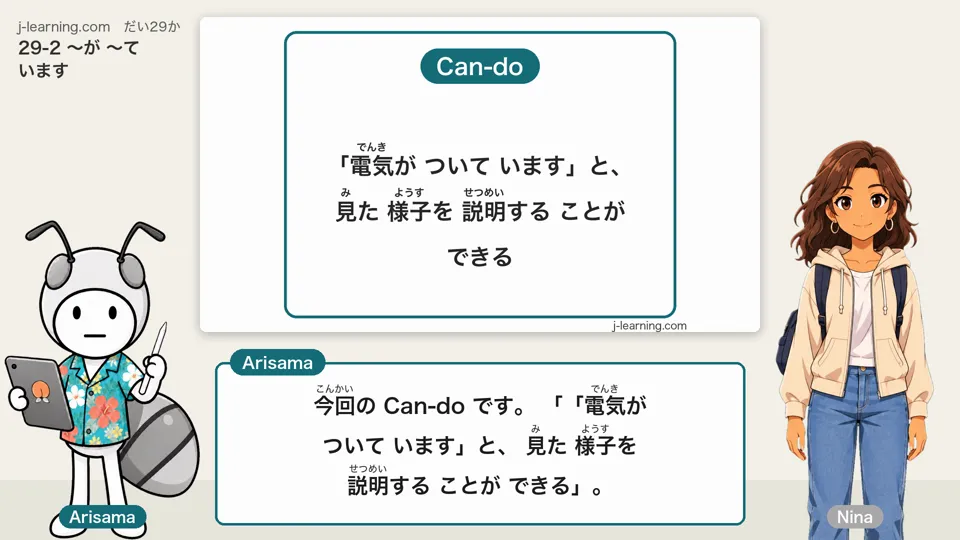 Can-do 29-2「電気が ついて います」と、 見た 様子を 説明する ことが できる。Je peux décrire l'état de quelque chose : « La lumière est allumée. »I can describe how things are: “The light is on.”Puedo describir el estado de algo: «La luz está encendida.»近日 公開Bientôt disponibleComing soonPróximamente
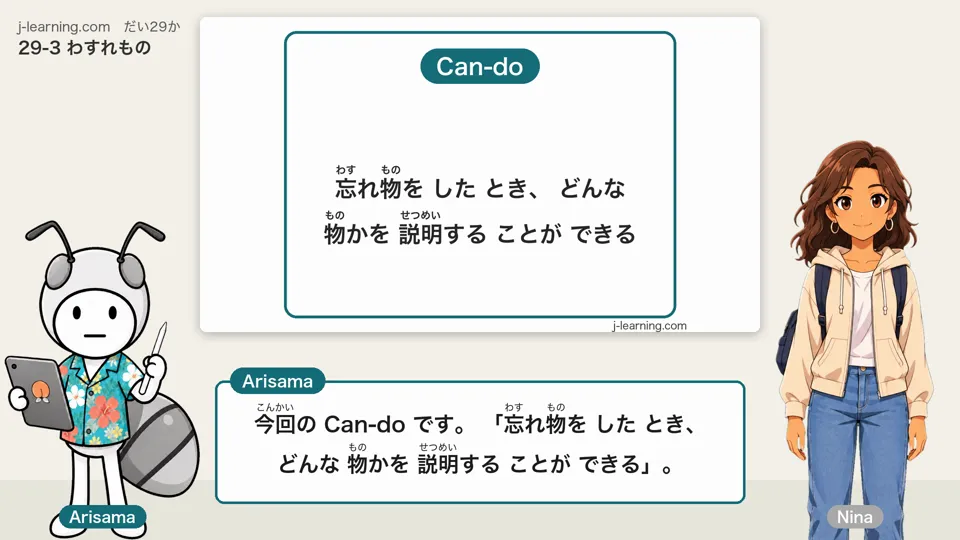 Can-do 29-3忘れ物を した とき、 どんな 物かを 説明する ことが できる。Quand j'ai oublié quelque chose, je peux le décrire.When I've left something behind, I can describe it.Cuando me he dejado algo, puedo describirlo.近日 公開Bientôt disponibleComing soonPróximamente