第29課Leçon 29Lesson 29Lección 29
だい29か
〜しまいました / 自動詞 Verbe intransitif (自)/ 自+ています
〜しまいました / 自動詞 Intransitive verbe (自)/ 自+ています
〜しまいました / 自動詞 Verbo intransitivo(自)/ 自+ています
字幕は ビデオの 下に 出ます。スイッチで 日本語・ローマ字・訳を 出したり 消したり できます。ふりがなは「字」の 設定で、訳の 言語は 右上で 変えられます。Les sous-titres s’affichent sous la vidéo. Les interrupteurs affichent ou masquent le japonais, les rômaji et la traduction. Les furigana se règlent avec « 字 », la langue de traduction en haut à droite.Subtitles appear under the video. Use the switches to show or hide the Japanese, rômaji and translation. Set furigana with “字” and the translation language at the top right.Los subtítulos aparecen debajo del vídeo. Los interruptores muestran u ocultan el japonés, el rōmaji y la traducción. Las furigana se ajustan con «字» y el idioma de la traducción arriba a la derecha.
Can-do ごとの ビデオLes vidéos, objectif par objectifVideos, one per can-doVídeos, uno por objetivo
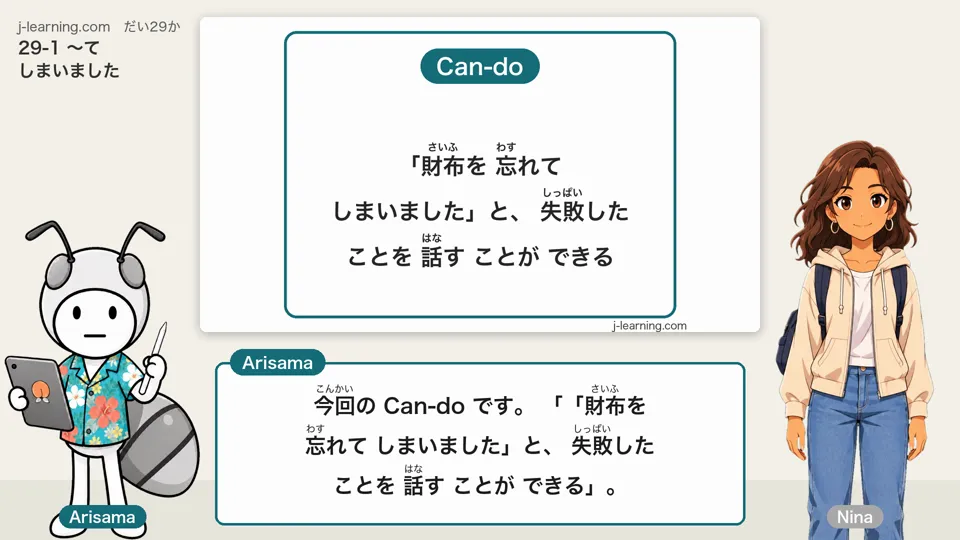 Can-do 29-1「財布を 忘れて しまいました」と、 失敗した ことを 話す ことが できる。Je peux raconter une erreur ou un incident : « J'ai oublié mon porte-monnaie. »I can talk about a mistake: “I've gone and forgotten my wallet.”Puedo contar un error: «Se me ha olvidado la cartera.»近日 公開Bientôt disponibleComing soonPróximamente
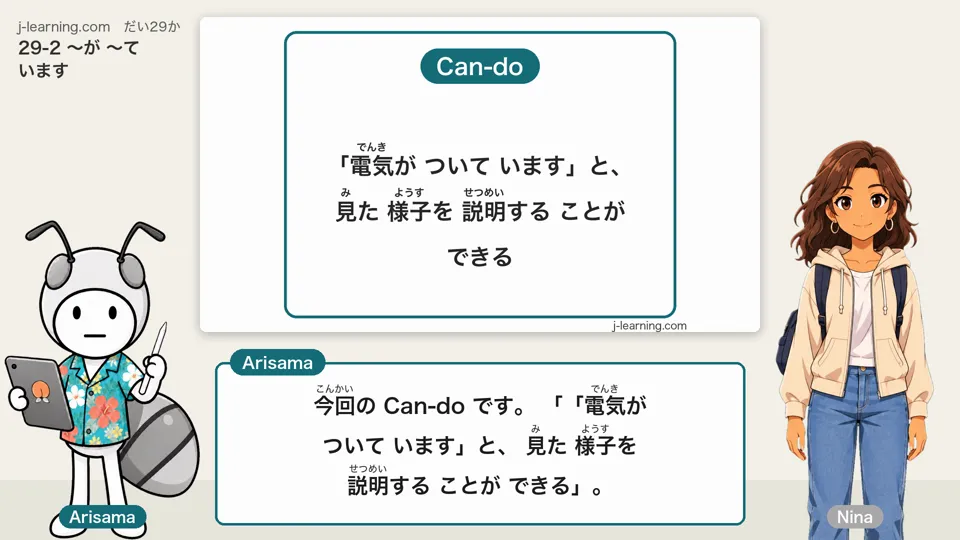 Can-do 29-2「電気が ついて います」と、 見た 様子を 説明する ことが できる。Je peux décrire l'état de quelque chose : « La lumière est allumée. »I can describe how things are: “The light is on.”Puedo describir el estado de algo: «La luz está encendida.»近日 公開Bientôt disponibleComing soonPróximamente
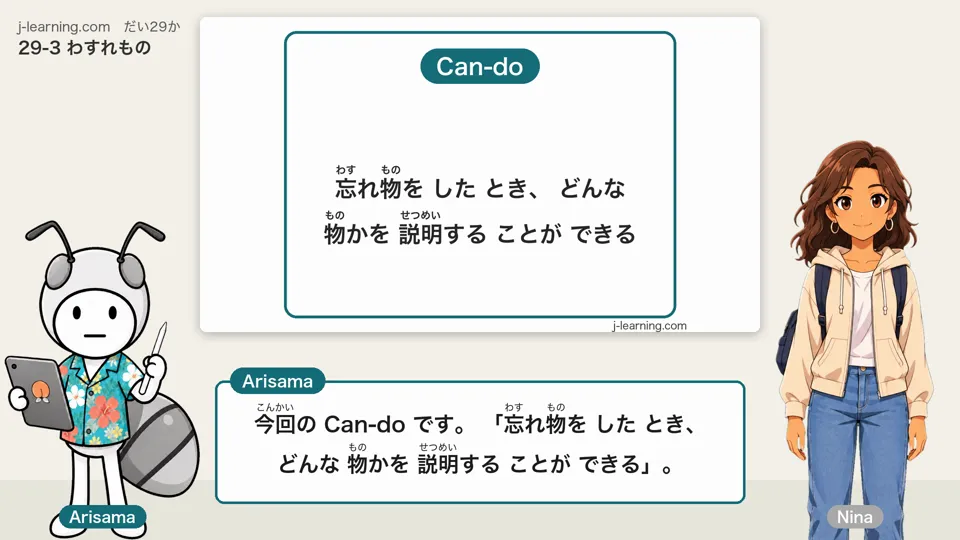 Can-do 29-3忘れ物を した とき、 どんな 物かを 説明する ことが できる。Quand j'ai oublié quelque chose, je peux le décrire.When I've left something behind, I can describe it.Cuando me he dejado algo, puedo describirlo.近日 公開Bientôt disponibleComing soonPróximamente